Content from Allfilm
Movie
2023•
5.4
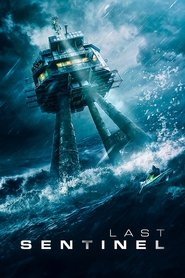
Last Sentinel
Set in the future on a war-ravaged Earth, four exhausted soldiers man Sentinel - a remote military base in a vast ocean that separates two warring continents. While their tour of duty ended three months ago, the relief crew still hasn't arrived and as the empty weeks turn to months, paranoia descends, testing relationships to breaking point...
Movie
2024•
7.0
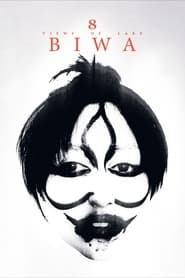
8 Views of Lake Biwa
On the shimmering shores of Europe’s otherworldly edge, two teenage girls, Hanake and her best friend are discussing their first love interest while gazing out at yachts sailing to Kyoto. They whisper prayers and poems, the language of their longings. But the magic is fading in their isolated fishing village as they’re dealing with a recent disaster, with some indulging in erotic art, some in spiritual spells. It becomes clear that intimacy alone won’t help them process their loss.
Movie
2006•
6.0
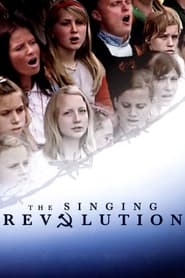
The Singing Revolution
Most people don't think about singing when they think about revolutions. But song was the weapon of choice when, between 1986 and 1991, Estonians sought to free themselves from decades of Soviet occupation. During those years, hundreds of thousands gathered in public to sing forbidden patriotic songs and to rally for independence. "The young people, without any political party, and without any politicians, just came together ... not only tens of thousands but hundreds of thousands ... to gather and to sing and to give this nation a new spirit," remarks Mart Laar, a Singing Revolution leader featured in the film and the first post-Soviet Prime Minister of Estonia. "This was the idea of the Singing Revolution." James Tusty and Maureen Castle Tusty's "The Singing Revolution" tells the moving story of how the Estonian people peacefully regained their freedom--and helped topple an empire along the way.

Movie
2013•
7.0
Ash and Money
Film is based on "Unified Estonia" which was a fictitious political movement created by NO99 Theatre and a large portion of the public treated as a real political force. Its convention, held for more than 7200 people, was one of the largest theatre events in modern European theatre history.
Movie
2007•
5.3
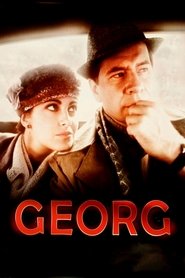
Georg
Unforgettable melodies, unique timbre and a memorable, soul-stirring voice. A mystery for women and authority for men, his talent was revered by the highest ranks of the Soviet Union and millions of ordinary people. Georg Ots took the stage when a huge country was recovering from the horrors of war, and his voice returned them faith in a bright future. Few people know what his life was really like.
Movie
2014•
7.0
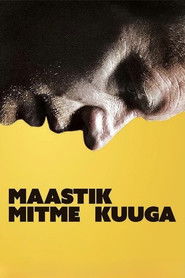
Landscape with Many Moons
“Landscape with Many Moons“ is a drama about a middle-aged man who lives a seemingly ordinary life with his wife and children. The truth is, however, that their relationship has reached a dead end but they prefer the illusory decorations of living together to the free fall into emptiness. The man gallivants around between his previous and current relationships without knowing exactly what to do with them. Living on the edge starts to overburden his nervous system and as a result, actual reality and dream-like reality blend together and it becomes ever harder to distinguish between what is real and what is not.
Movie
2013
To Breathe as One
In 2009 Maureen & James Tusty, filmmakers for The Singing Revolution, produced a second film out of Estonia. Seen nationally on U.S. Public Broadcasting, this one hour documentary tells the history of Estonia’s massive Song Festival, and the role music plays in Estonian culture, even today.
Movie
2000•
7.0
Madonna Is Not Dead A.D. 2050
Two elderly people have decided to start having children. There was no time for this in their youth, they had to work hard to survive. Now, in retirement, nimble old people are making children for sale to spend the night with beer, cigarettes and cocaine. It is the year 2050. The third child of the elderly is about to be born and the selling price is rising. The moral and ethical categories have changed. An aging Europe needs children.
Movie
2017•
6.0
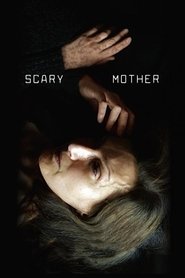
Scary Mother
A 50-year-old housewife, Manana, struggles with her dilemma - she has to choose between her family life and her passion, writing, which she had repressed for years - she decides to follow her passion and plunges herself into writing, sacrificing to it mentally and physically.
Movie
2013•
7.7
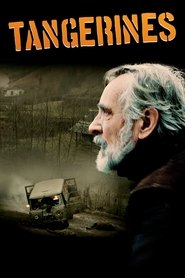
Tangerines
War in Abkhazia, 1992. An Estonian man Ivo has stayed behind to harvest his crops of tangerines. In a bloody conflict at his door, a wounded man is left behind, and Ivo is forced to take him in.
Movie
N/A
Supporting Role
A retired Georgian film star, used to playing heroic leads, embarks on a cathartic odyssey after being offered a supporting role of an unpleasant elderly man.

Movie
2022•
5.3
Burial
Set in the last days of World War II, a small band of Russian soldiers led by intelligence officer Brana Vasilyeva, who is tasked with trafficking the remains of Hitler back to Stalin in Russia. En route, the unit is attacked by German ‘Werewolf’ partisans and picked off one-by-one. Brana leads her surviving comrades in a last stand to ensure their ‘cargo’ doesn’t fall into the hands of those who would see it buried in order to hide the truth forever.
Movie
2019•
7.7
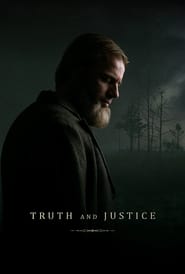
Truth and Justice
Estonia, 1872. The uncompromising new owner of Robber's Rise must battle with hard work, his spiteful neighbor and with his own family and beliefs to transform the poor land into a flourishing farm of his dreams.
Movie
2016•
5.2
The Spy and The Poet
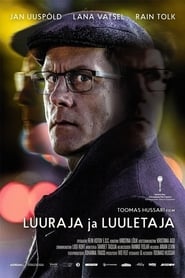
Lonely secret service officer Gustav meets a mysterious gypsy woman. It soon comes clear that it is a trap set by the Russian intelligence. Gustav is ordered to continue the relationship to get a better understanding of the enemy's plans. Unfortunately, Gustav finds himself struggling with the task, as he is falling in love with the enemy. Is there a way out of this situation?
Movie
2015
Fast Eddy's Old News
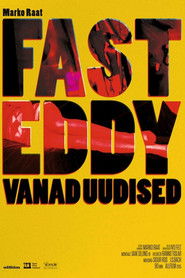
The story of Edgar Väär (1929 Kuressaare, Estonia - 2015 Toronto, Canada), a freelance cameraman, who earned his nickname ‘Fast Eddy’ by reaching the scene of events before police and CBC crime reporters. A major part of his filmed footage has aired on TV. The rest of the footage, over hundreds of thousands of film stock, that he didn’t manage to sell to news broadcasters, are piled up in Eddy’s downtown Toronto penthouse rooms and basement. Do old news have value to be sold? What does the end of a person look like who has documented the ends and destructions of many others in the infotainment industry?

Movie
2010
Silent Surrender
What does it feel to live in the turbulent times as a ten-year-old, in the country that one day thrives and the next day will disappear from the world map? The pivotal times of the year 1939 both for Estonia and the whole world changed history. The filmmakers examine the events side by side with the memories of the children of the era. Family photos, newspaper cuts, dramatic archival excerpts, memories of elderly people who used to be children at that time - all of this reflect the tragic events of 1939 and the silent destruction of the Republic of Estonia.
Movie
2017•
5.0
The Confession
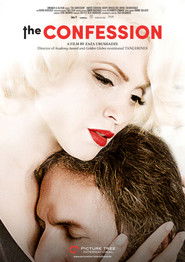
Priest Giorgi, a former Film Director, is sent to serve the small parish in the mountain village. To bring villagers closer to church he starts showing films there. After the screening of the first picture - "Some Like It Hot" - the audience imply that the local music teacher Lili looks exactly like Marilyn Monroe. After meeting Lili, Father Giorgi's balance between cleric and secular world starts to quiver - the woman is extremely sexy and the temptation is difficult to resist.
Movie
2018•
3.5
Portugal
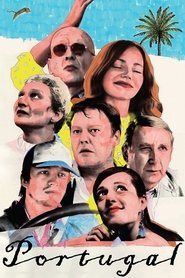
Karina and Martin are in a pleasent relation where everyday life flows in an effortlessly accustomed way and no small misbehaviours can shake it’s rush. Life is good. Perhaps it’s this perfection and frequent patterns that make them finally pose a question – is everything to be expected in life? This is a story about following the yearning of your soul. Longing for something other than the present and having the courage to be deliberately lost.
Movie
2025•
8.5
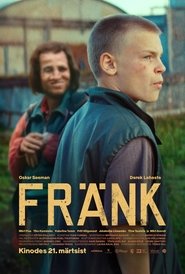
Fränk
Following a serious domestic violence incident, 13 year old Paul arrives in an unfamiliar town where in his pursuit of happiness he makes one bad decision after another. His seemingly inevitable downfall is thwarted, however, by a strange disabled man.
Movie
2010
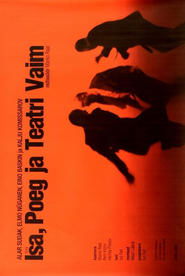
Father, Son and Holy Theatre
Alar Sudak alias Elaan is the don Quijote of Estonian theatre - predestined to eternal loneliness. Sudak's dream to become an officially acknowledged actor has never come true. He has failed the entrace exams to the Drama School of Estonian Academy of Music and Theatre and other schools. The documentary tells a story related to the Old Testament - including good-hearted Satan, water wars, unrequited love of theatre, jurisprudence, community's revenge that lasts over several generations and regimes. Elaan's life and destiny includes so much drama that he is unable to let go of it - as his actor's spirit cannot live without it.
TV
2001
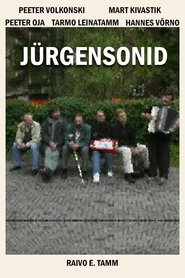
Jürgensonid
In the summer of 2001, six prominent men moved into an abandoned farmhouse for a week. Following the example of the world-famous reality series "Survivor", everyone was allowed to take only one item they loved. The aim of the men was to test whether it is possible to cope with the minimum wage in today's Estonia, and if so, in what way. "Jürgensonid" is a humorous, fully documentary television study of survivors in local Estonian conditions.